Book Review: Exit West by Mohsin Hamid

Exit West by Mohsin Hamid. Book ReviewI was quite taken by the conversation Terry Gross was having with a Pakistani author on Fresh Air on NPR. His composed and very sensible views made me listen more closely. And that is how I picked up Exit West by Mohsin Hamid.

Characters: Set in an unnamed city (resembling Lahore in Pakistan), the story is about two main, very dissimilar characters, a young man Saeed- who lives in a very close knit family with his parents and who has a strong spiritual side, and Nadia – a young woman who has left her family to live on her own (terms) and who is not particularly religious. They develop a friendship that leads them to be together for a large part of the novel. Interestingly, Nadia always wears a long flowing black robe covering her body from neck to toe that might make her seem religious/ traditional, but she has very independent ideas about living and loving and sexual freedom, which only  goes to make a point that despite ‘conservative’ appearances, people could actually be different/ modern/ progressive in their thinking.

Storyline: The ‘normal’ things like surfing the net or freedom of movement or being able to hang out in restaurants or listening to music- things we take for granted- begin to get obstructed in Saeed and Nadia’s city by extremist militant activities, causing increasing bombings and destruction and killings and curfews. After Saeed’s mother is killed, he and Nadia, like many others in their city, decide to flee their country, reluctantly leaving behind his father who is firm on living (and dying) where his late wife’s memories still lived. The father making his son leave for the latter’s safety, knowing well that he might never see him again and agony of the son leaving his father in peril must describe only mildly the pain of refugees and, to some extent, of the immigrants.

This migration happens through these “magical doors” that are opening here and there around the world, as the reader gathers from short independent scenes from other countries interjecting within the main story. What it also does is it expands the canvas and context of the story from two characters to “everywhere”. Hamid used these “magical doors” to simplify the logistics of movement, ‘a relatively minor thing’, compared to the major issues of what makes people leave their country where they have belonged their entire lives, and what happens when they find themselves in another country among the natives. Saeed and Nadia secretly buy access to one such door through an agent. Against the ever changing backdrop of life with large groups of other refugees in foreign lands they go to, of meagre resources, and of hostility and conflict with the natives, Saeed and Nadia’s relationship also morphs in a way that I thought was very realistic.

Dystopia: The story is set in our present world with internet and smart phones and such, juxtaposed with the elements of wars and unrest in most parts of the world causing migration of large populations, the refugee crisis that develops as a result of such masses taking over other stabler regions /countries of the world, and the hardships of such an existence. It reminded me of the dystopian novels I had read, those cautionary tales set in some future time. But wait a minute! Terrorist activities and wars in vulnerable parts of the world and refugee crisis and hostility towards immigrants – it is all happening now. Are we actually living in a dystopian world? This thought was so unsettling!

Narrative: The flow of the novel is beautiful, and sentences long, as if building a crescendo. Some of the insights and sentences in the book are remarkable and make you think. Besides, it is relatively a short read. (230 pages paperback). I gave it four starts on my Goodreads.

Quotes:

“..an old woman who had lived in the same house her entire life…she had never moved, and she barely recognized the town that existed outside her property…and when she went out it seemed to her that she too had migrated, that everyone migrates, even if we stay in the same houses our whole lives, because we cant help it.
We are all migrants through time.”

“He prayed fundamentally as a gesture of love for what had gone and would go and could be loved in no other way. When he prayed he touched his parents, who could not otherwise be touched, and he touched a feeling that we are all children who lose our parents… and we too will all be lost by those who come after us and love us, and this loss unites humanity, unites every human being, the temporary nature of our being-ness, and our shared sorrow, the heartache we each carry and yet too often refuse to acknowledge in one another, and out of this Saeed felt it might be possible, in the face of death, to believe in humanity’s potential for building a better world.”

“…for personalities are not a single immutable color, like white or blue, but rather illuminated screens, and the shades we reflect depend much on what is around us.”

“Thus in the end their relationship did in some senses come to resemble that of siblings, in that friendship was its strongest element, and unlike many passions, theirs managed to cool slowly, without curdling into its reverse, anger, except intermittently… that if they had but waited and watched their relationship would have flowered again, and so their memories took on potential, which is of course how our greatest nostalgias are born.”

A Raindrop On My Windowsill, And That Bird Singing Outside…

A Raindrop On My Windowsill, And That Bird Singing Outside…

Those were particularly dull days of the week,
Friday didn’t quite light me up
That lingering gray-ness weighing down
Into my days, from the skies above.
But Sat morning, I woke up
To the first Spring rains.
The grass was green, the plants
drippin’ with all it can contain
The earth emanated the love-scent
Of yearning, now spent
That Nature’s way of doting
Never failed to surprise me in
ways most endearing…
A raindrop on my windowsill
And that bird singing outside!

A surprise that I knew was in the offing, but what a pleasant one it was: A raindrop on my windowsill, and a bird singing outside!

A raindrop hangs out on my windowsill in a just-dropped-in-to-say-hello kind of way…
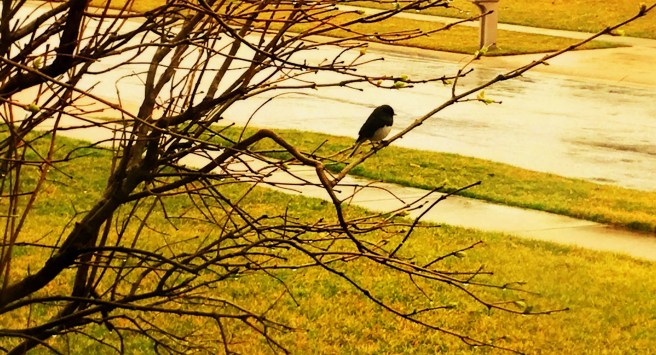
This bird sits on the still almost bare tree, but itself a forerunner of Spring that was on its way…

Weekly photo challenge: Focus, surprise

April Monochromes


CB&W: Letters K and L

Kite flying, kids, black and white, photography, monochrome, photos
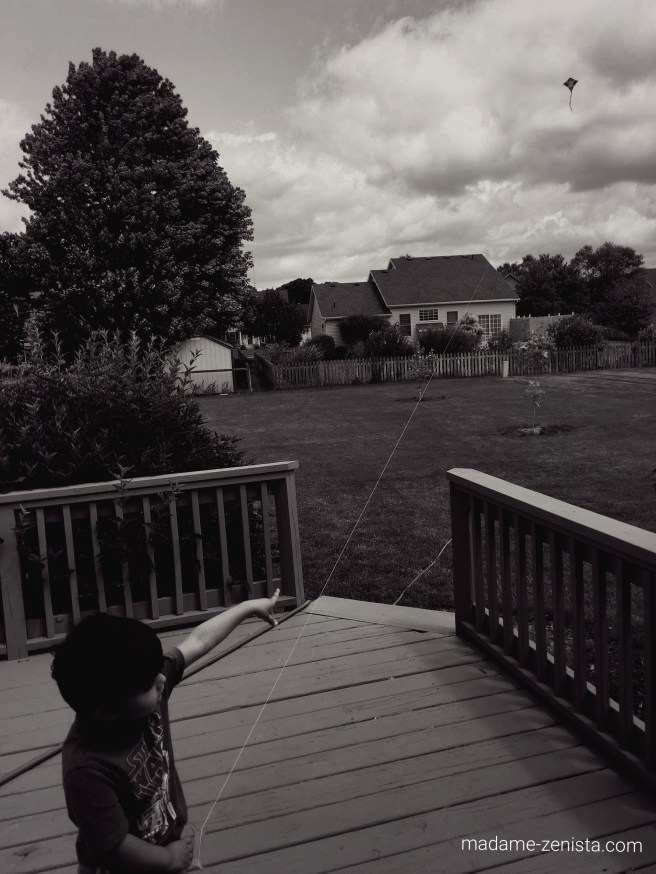
Kid flying a kite. Monochrome # 016
Kids, laughter, laughing, black and white, photography, monochrome, photos
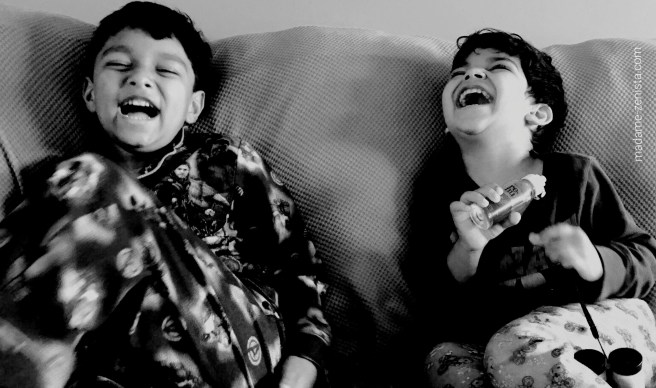
Kids Laughter Monochrome # 017

img_0155

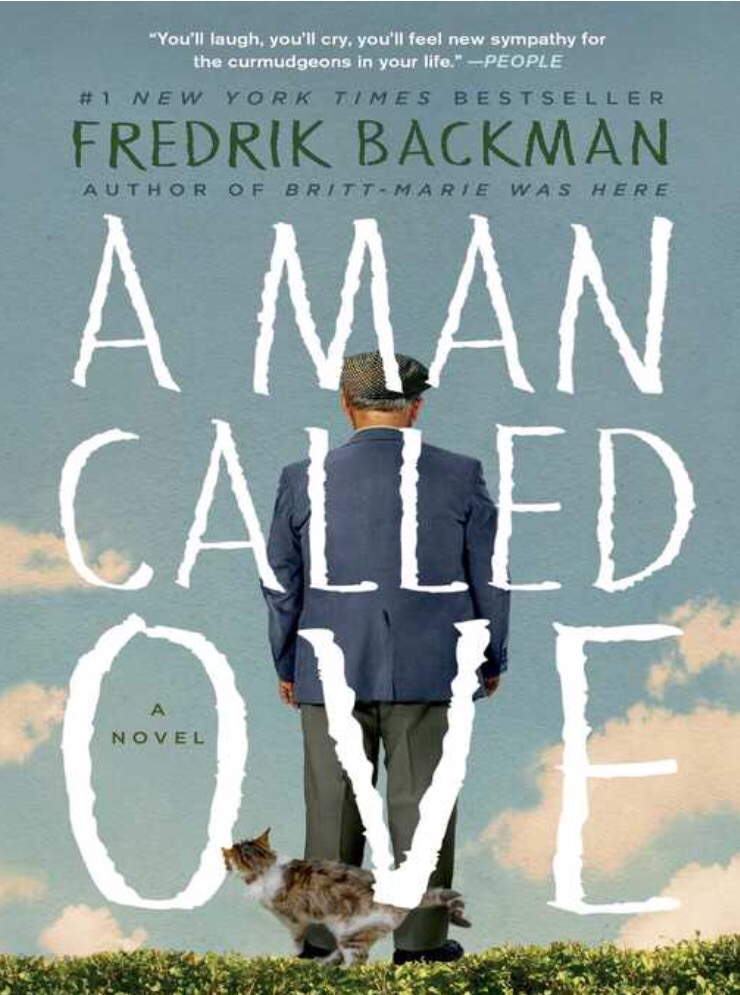
Book Review: A Man Called Ove

img_0709Intrigued by all the hype, I downloaded  the book on Overdrive (the great app that lets you borrow books online-all you need is a Library Card). I was finishing up other books and somehow could read just a few and it got auto-returned in 3 weeks. As I placed another hold to get the book back, I downloaded the audiobook from Hoopla as well. Part book and part audiobook, I eventually did finish A Man Called Ove by Fredrik Backman

The story: is set in Sweden. It is about a 59-year old (though the character actually sounds more like a 70-ish) fastidious and grouchy man called Ove (oo-veh) who has just lost his job to someone of the younger tech savvy generation, and lost his wife of several years, to cancer. He is an old-school, black-and-white kind of guy, who lives to follow rules. A handyman who loves to use his tools, he believes very firmly that Saab made the best cars on earth. The other characters in the story are Ove’s neighbors, including a young Iranian immigrant, Parvaneh, who is pregnant mother of two little girls,  the old couple Rune and Anita, a few other neighbors, and a stray cat. Ove tries to commit suicide (to join his departed wife) several times, but some matter concerning either a neighbor or someone breaking a rule or the stray cat keep him from his matter-of-fact important project of dying successfully. Interjected with backstories from his childhood and about his late wife Sonja, the main story develops with Ove’s increased interaction and involvement with his neighbors and their lives in a series of tragic-comic events.

Good things about the book:
Backman’s has a peculiar way of bringing out humor that Ove’s strong opinions evoke. And that runs throughout the book. Ove, in spite of appearing to be angry with his “rule-breaking” neighbors (and the whole world in general), has a soft heart. How this lonely aging man develops a bond with the two little neighbor girls (like a grandfather to them) is very endearing (As a side-note, and this is as funny as it is cultural, but in India, we address almost all elders or elderly- including those we don’t know, like the vegetable vendors or shop keepers- as either uncle/aunty or grandpa/grandma: less alienating and giving respect that comes with age). However, the most important aspect, I think, that makes this book so popular, despite it not being particularly “exciting” or “deep”, is that it gives the reader a sense of community and togetherness, especially when (or because) it seems to be waning so swiftly from our lives. I digress- but since the time of cavemen, the human race increased its odds of survival against the stronger wild predators and elements of Nature being in groups and communities. It is so basic to our evolution and must be part of our DNA. That the readers all over the world who loved it and felt so good about these basic qualities bears testimony it.

If it is a simple story that is a relatively light read, A Man Called Ove is also funny, feel-good and very heartwarming. As I progressed towards the final chapters, warm tears were streaming down my cheeks and it just felt so good at the same time (I seem to love shedding tears watching movies or reading, and strangely not at all ashamed of it).

So I’d say, give the book a shot.
Check out: the Movie Trailer here, and the entire audiobook here (not sure how long before its taken down!)

SOME QUOTES:

To love someone is like moving into a house,” Sonja used to say. “At first you fall in love in everything new, you wonder every morning that this is one’s own, as if they are afraid that someone will suddenly come tumbling through the door and say that there has been a serious mistake and that it simply was not meant to would live so fine. But as the years go by, the facade worn, the wood cracks here and there, and you start to love this house not so much for all the ways it is perfect in that for all the ways it is not. You become familiar with all its nooks and crannies. How to avoid that the key gets stuck in the lock if it is cold outside. Which floorboards have some give when you step on them, and exactly how to open the doors for them not to creak. That’s it, all the little secrets that make it your home

Death is a strange thing. People live their whole lives as if it does not exist, and yet it’s often one of the great motivations for the living. Some of us, in time, become so conscious of it that we live harder, more obstinately, with more fury. Some need its constant presence to even be aware of its antithesis. Others become so preoccupied with it that they go into the waiting room long before it has announced its arrival. We fear it, yet most of us fear more than anything that it may take someone other than ourselves. For the greatest fear of death is always that it will pass us by. And leave us there alone.”

Dark Dense Clouds and a Raindrop

Raindrop under the dense clouds
A raindrop against the dark dense clouds. Monochrome # 015

The heart flutters with excitement
As the seasons change guard
Ever since it did in a lil’ girls backyard
It rained and rained. Then it rained some more
And awoke the buds after a peaceful slumber
Flirting, in the half- asleep, half -awake stupor
With a raindrop, that stayed as long as it could
And then bid adieu to the sombre bud
The dark dense clouds still so heavy with love
A raindrop too many’d soon descend from above…

In response to the The Daily Post: Weekly Photo Challenge – ‘Dense