Bird by Bird by Anne Lamott

Bird by Bird by Anne Lamott

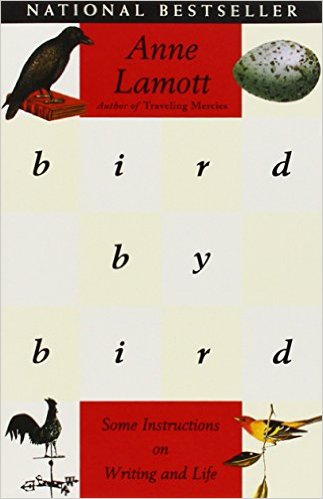
Having googled “the best books on writing”, this website came up in the first few web results. Of the list provided there, I chose to start with reading Bird by Bird: Some Instructions on Writing and Life by Anne Lamott.

The book is systematically divided into five parts. The first part primarily deals with the nuts and bolts of writing, zoomed in when one sits to write. Starting with the most difficult aspect of how to get started, it talks also about the ‘first drafts’, focusing on one aspect at a time, character and plot development, and designing the setting. Parts 2-5 are more on the philosophy of writing and the subtler aspects like  listening to the inner voice (and not listening to it when its being mean), doing the research, getting help, dealing with ‘writers block’ etc. Publishing is also included. The final part, the one I loved most, is where she takes it to the highest level, much like a crescendo, motivating you in such a way that you cant help but do the ‘sacred duty of writing’. I believe that bringing out the best in a person is a great thing, and this book does it leaving you feeling expanded and inspired.

All the steps and tools mentioned seem organic and intuitive, as against a ready-made formula of some sort. After all, its important to recognize writing done for the sake of joy of itself, rather than for just seeing ones name in print. It is peppered with interesting quotes and anecdotes throughout. The best part, however, is the humor weaved into the “lessons”, self-deprecating more often than not. As you laugh, you cant help but love her for it. I think, by exposing her flaws to the readers, she destroys any misconceptions of larger-than-life writers/writings, and about herself. That is very generous and magnanimous of her.

All in all, a very comprehensive book and has become a classic on writing for a very good reason. I would highly recommend it for aspiring writers and bloggers alike.

Book Review: Almond Eyes, Lotus Feet – Indian Traditions in Beauty and Health

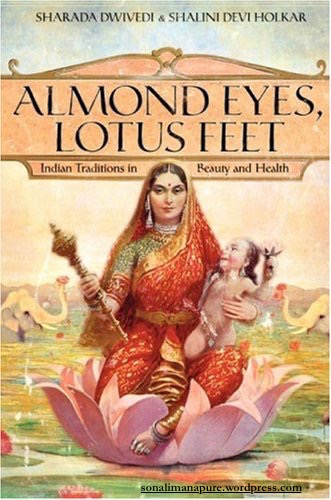
Almond Eyes, Lotus Feet: Indian Traditions in Beauty and Health

On a chilly winter evening, sitting by the fireplace bundled in my cozy throw and having hot chocolate or something, listening to the stories and secrets from times gone by… This is exactly how I felt reading through the book.

Almond Eyes, Lotus Feet is a fictional memoir of an Indian Princess of her time and traditions in the royal household, written by Sharada Dwivedi and Shalini Devi Holkar. The book is replete with household remedies for health and beauty from either the kitchen or the garden, rather than the store bought jars and bottles. With the backdrop of her childhood in Rajasthan, her marriage, moving to husbands royal home in Hyderabad and her journey spanning seven decades of her life, the Princess describes all the health and beauty traditions handed down from generation to generation.

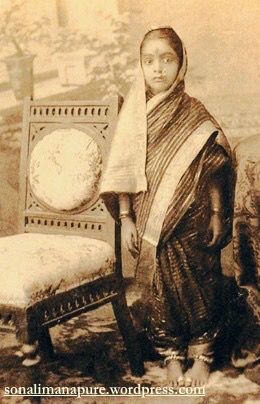
A Young Maharashtrian Bride

Did you ever have the urge to time travel? I always did, to travel in the past. To see the people and understand their life and lifestyle, their customs and beliefs, the wisdom that got lost with time. I’ve always been curious to know how we’ve evolved in our ways and values as a society. I have vivid visuals from the conversations as a child with my grandmother of her time as a child bride, her mothers home and then that of her husbands, her lifestyle and all the interesting stories. I have always wanted to know more about the culture of the Indian subcontinent that is as old as the hills. And  about Ayurveda. Oh – and how to be beautiful.

Maharani Indira Raje Holkar of Indore (A.L. Syed: 170 K.V. Talcherkar)
Maharani Indira Raje Holkar of Indore
(A.L. Syed: 170 K.V. Talcherkar)

As you read through each beauty formula in this book, you become one with this ‘beautifying’ process and certainly are inspired to try some out. I thought it had a similar effect that you get after shopping for clothes or cosmetics: it makes you feel beautiful. The princess also talks about the importance of saleekha (an Urdu word meaning balance and moderation, neither too much nor too little) that is expected of the palace women. Reading through such a desirable image of women makes you want to be like one, balanced, respectable, dignified and delightful.

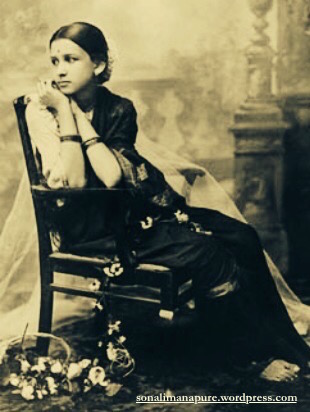
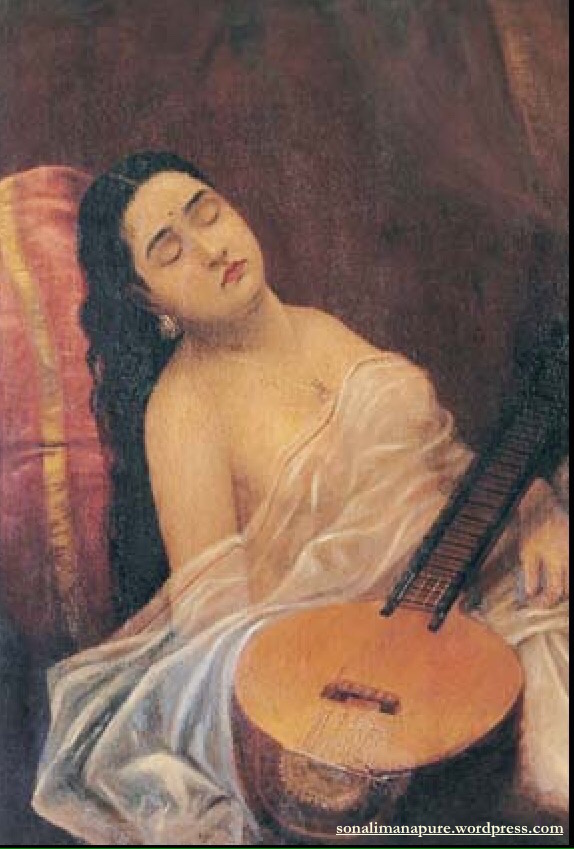
After the massage (by Raja Ravi Verma)
After the massage
(by Raja Ravi Verma)

The long baths and head bath rituals in the zenana (secluded women quarters) are explained in engaging detail and exude sheer luxury- one of my many favorite parts in the book! After their long headbath they’d lay “... stretched out in the sunlight after the shampoo, their hair spread over a basket of herb incense smoke, lazily watching the parrots in the mango trees and laughing at some silly joke. That sort of vision makes me long to be young again, close to the earth and closer to other women. Somehow in those days we were all sisters in these simple pursuits. That was a very sweet comfort” I like the idea of women having the time to groom and feel good about themselves without rushing through it.

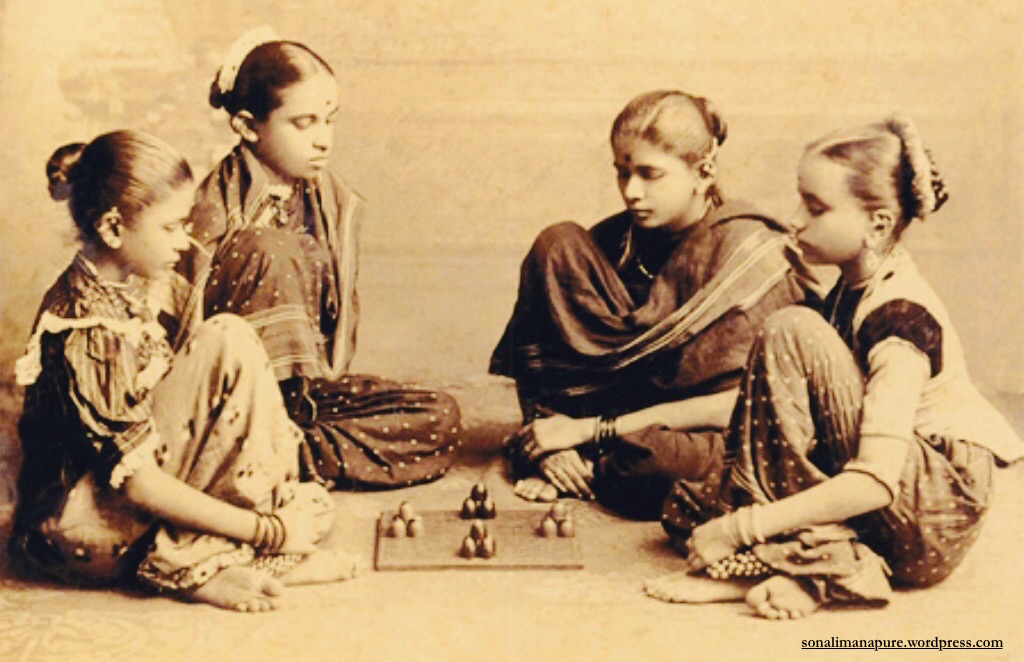
Young girls playing chaupat, precursor to Ludo (Hemlata Jain: Raja Deen Dayal)
Young girls playing chaupat, precursor to Ludo
(Hemlata Jain: Raja Deen Dayal)

Today, I am not sure why, but we seem to rush all the time; everything is a means to some distant or unknown end. We miss living the moment, which, I feel, these women did much more than we do. And they also got so much ‘girl-time’ and had the sisterly bonding, which is priceless!

The mention of flowers, the smells, the clear ponds, the changing seasons brings forth a myriad emotions and evokes memories you might or might not know you had. A passing mention of Kalidas’ Ritusamhara in the book brings forth such a beatific picture:

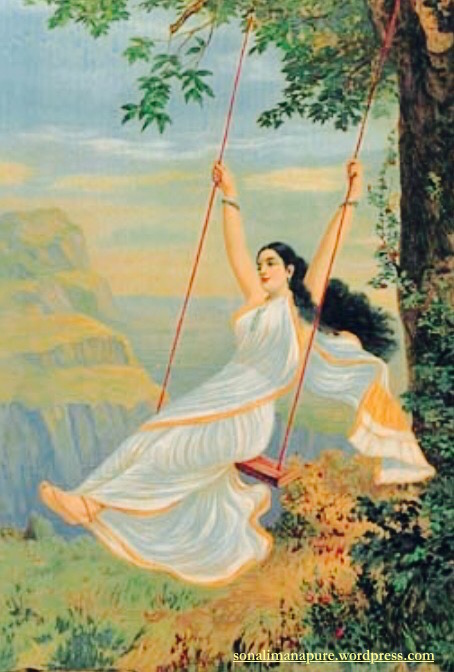
The temptress, Mohini (Farooq Issa, Phillips Antiques: Postcards)
The temptress, Mohini
(Farooq Issa, Phillips Antiques: Postcards)

One of our renowned poets, the famous Kalidasa, who lived in the fourth century, has written a poem on the seasons called Ritusamhara “Garland of the Seasons,” which expresses the rhythm and the joy of our seasons, passing from the heat to the cool of the monsoons, from the rains to the blessings of winter. He describes it all through lovely courtesans. Robed in transparent muslin in the heat of summer, they smear their breasts with sandal paste and their hair with light perfumes. Wearing flower garlands around their necks, they fan themselves with fans moistened in sandalwood water and swim in cool lakes full of lotus blossoms. Lac dye shines on the soles of their feet and jewels cold to the touch adorn their bodies.”

Enjoying the fragrance of the outdoors (Farooq Issa, Phillips Antiques: Postcards)
Enjoying the fragrance of the outdoors
(Farooq Issa, Phillips Antiques: Postcards)

For me, this book also took me back to my childhood days as I remember using the same shikakai and other herbs like Ritha, nagarmotha, orange peels etc. that my grandmother used to have powdered for the women of the house to wash hair with. I have used chickpea paste (besan) and other household ingredients as a skin scrub and cleanser. We used to make the spiced tea in our household to cure sore throat, using turmeric (haldi), holy basil (tulsi), peppercorn etc.

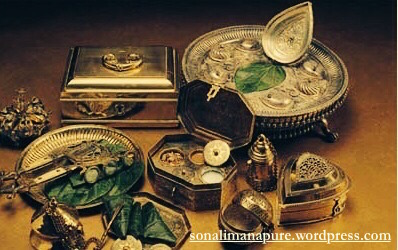
'Paandaans' and 'supari' cutters (Suresh Cordo)
‘Paandaans’ and ‘supari’ cutters
(Suresh Cordo)

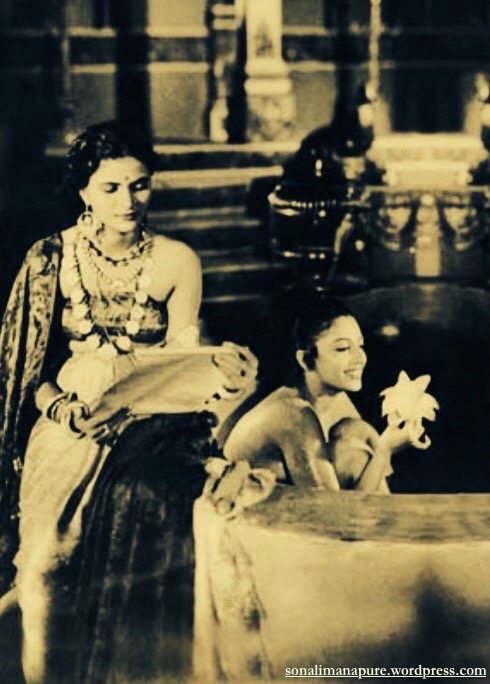
Its a book by women, of women and for women for the most part. If you will let it, the imagery the words create will, along with the actual vintage photographs, paintings, postcards, zoom you back in time. And the sensuous indulgences described will delightfully keep you there, as time itself would seem to have become still, waiting on you. I have felt the comfort of finding the ‘me’ that lived back in time. A cut and dry account of beauty and health regimen would made a book quite informative, but quite boring all the same, had it not displayed the camaraderie, the belongingness and the love behind it that these women enjoyed, which was an integral part of their lives.

Personally, I find the book is a keepsake of sorts.

Women bathing (B. D. Garga)

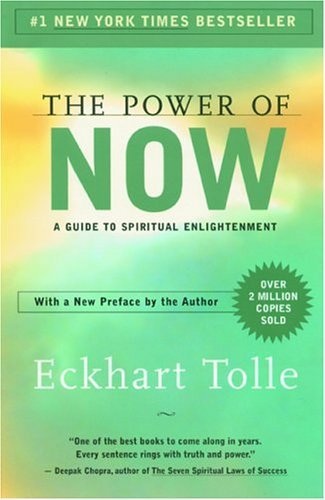
Book Review: The Power of Now by Eckhart Tolle

The Power of Now by Eckhart Tolle“Everything that needs to be said has already been said. But since no one was listening, everything must be said again.” Especially so, methinks, when it comes to the business of getting enlightened.

The Power Of Now by Eckhart Tolle was a book I had heard about on and off but never got around to it. But I am ever so glad I did. It is in a question-answer format based on the authors talks and the questions he was asked. The few main concepts appear repeatedly throughout the chapters only to drive the point home so the reader really gets it. Tolle, from time to time, quotes from the New Testament, Zen, Buddhism, Hinduism, Sufism asserting that his teaching is nothing new and is already present in the teachings of the major world religions.

I listened to the audiobook that worked best in my situation where taking time out specifically to read was not working out. The authors calm voice would even put me to sleep, if I was listening lying down after the days work! Ha! But the best part of  an audiobook is I play it over and over while I’m doing work around the house as against picking up the book to read all over again.

The Main Ideas:

1) You are NOT your thoughts
This plants a seed in us of the concept that thoughts are an independent thing separate from the One who is observing them.

I found it interesting how the mind (and the thoughts it generates) were significantly dwarfed in comparison to the much higher concept of its Owner. The mind is more or less like a limb or the eyes, very important, yet but a part of the whole. Unfortunately, a majority of the world is suffering from the epidemic of “incessant thinking” and the mind has taken over its Master, the Self.

2) Time and the mind is one and the same thing
Imagine the Earth devoid of human life, inhabited only by plants and animals. The question “What time is it?” or “What’s the date ?” would be quite meaningless. The oak tree or the eagle would be bemused by such a question. “What time?” they would ask. “Well, of course, it’s now. What else is there?” The predominance of mind is no more than a stage in the evolution of consciousness. We need to go on to the next stage now as a matter of urgency lest the human race destroy itself.

The eternal ‘Present’ is the space within which ones whole life unfolds. Life is now. The past is a memory trace stored in the mind of a former Now. The future is an imagined Now and when the future comes, it comes as the Now.

3) All teachings are but signposts
All spiritual teachings only point to the one Reality that can not be described in the realm of words of any language. People might talk endlessly about ‘God’ without ever knowing or experiencing the Reality that the word points to.

Reminds me of how it is said beautifully in the Tao Te Ching about the Tao (the mysterious Way of the universe): those who know do not speak of it, those who speak do not know!

4) Emotional Pain Body
This is an autonomous entity in itself residing in us that is formed by pain experienced and accumulated the past and present. It feeds on pain and wants to survive by either suffering or inflicting pain on oneself or others. To acknowledge and observe it in oneself is the beginning of its end. A nice piece in the Huffington Post here.

This concept is of significance (and could be very helpful) in intimate relationships, as that’s where one can see the pain body awaken and create trouble.

5) Inner Body
In the past seekers have held the body as a hurdle to getting to enlightenment. Like the Buddha himself, who subject his body to extremes for six years trying to transcend it and realized that it was futile. Tolle says that the body is in fact the key to getting to the Pure Consciousness or Being through what he calls the Inner Body, which is the energy field within that gives life to the physical body. He gives some ways to connect with the inner body: observing the silence without that takes you to the stillness within, concentrating on ones breath, paying total attention to routine mundane activities.

My take:
Tolle has put some abstract concepts into words skillfully. The best part about the book is that enlightenment, or ones journey towards it, does not necessarily have to be something in the distant future only after years of meditation. He shows how to experience eternity right now, as now is all there is. I really found it quite encouraging.

I experienced that ‘shift in consciousness’, if you will, when I felt that eternity in the Now with my complete presence and the absence of any thought mostly with and around Nature. It truly is beyond thoughts or words – the peace, the ecstacy. That was the coolest part. Though it might last for a short time before a thought barges in to label this ‘state’. I think we all have glimpsed it, aware or unawares, one time or the other. I have been doing meditation, or attempting it for some time now, and honestly, I don’t know what exactly am I to do with my eyes closed. I’ve read a lot of literature on it. But only a handful of times have I come out of it and felt close to how it ‘should be’. That said, being fully present every moment is meditation without having to sit in solitude, cross legged and eyes closed- something impossible for me with preschooler and a toddler!

Lord Krishna in the Bhagwad Gita tells Arjuna to put in the best and 100% in any work (fully present), not expecting the fruits of it (not thinking) but surrendering it to The Lord. This can happen when one is fully present. Conversely, being fully present brings a sort of loving detachment with the work done, as prescribed by Lord Krishna. Well, at least I see it that way!

Most of us are book hoarders in varying degrees. It gives a sense of “owning” the wisdom in them. But the best way is really to take the concepts from great books, internalize them (i.e. go beyond the intellectual stimulation and academic discussion), and most importantly practice to make them a part of you. That would be, in the truest sense, owning them forever. The Power of Now is a great book with wisdom that comes from experience.


Book Review: The Continuum Concept

This is a must read for all parents to be.
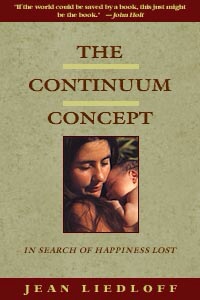
The Continuum Concept by Jean Liedloff

The Continuum Concept is a book that blew my mind; I had read nothing like this before! The author Jean Liedloff spent two and a half years deep in the South American jungle living with Stone Age Indians of the Yequana tribe. This experience demolished her Western preconceptions of how we should live, and led her to a radically different view of what human nature really is. She shows us how we have lost much of our natural well-being and suggests practical ways to regain it for our children and for ourselves.

The continuum theory: “In order to achieve optimal physical, mental and emotional development, human beings, especially babies, require the kind of experience to which our human species adapted during the long process of our evolution.”

Parenting:
That said, the book brings forth ideas in stark contrast to the prevailing practices in the western world. I have to write this: there were some excerpts which were quite unsettling to me that I had to stop, collect myself and with all the courage go back to reading it; who wouldn’t be vulnerable to the idea of babies suffering? The worst part is, this ‘mistreatment’ happens at the hands of parents/ caregivers with much misguided ideas. And that is precisely why it has become my mission of sorts to strongly recommend this book to new mothers or mothers to be.

The book gives some basic practices during the initial moments, weeks and months after a child is born: constant physical contact with the mother/caregiver, co-sleeping, breast feeding on cue (and not trying to ‘discipline’ the baby at this stage by feeding at intervals that you set for them), carrying the baby around in arms, immediately responding to the child’s signals and so on. Is this not something that a mother would instinctively do, only if she is allowed to do so and not ill-tutored otherwise? Of course! However, we have some popular theories to care for the newborn that are just the opposite!

Postpartum depression: The moment the baby is born, the mother is keyed in to hold the baby, nurse and caress it. If this stimulus is not met with this right response and those moments missed, then when hours or even minutes later, the baby is finally brought to her, the mother has already gone into a psycho-biological state of mourning. The result is often that she feels guilty about not being able to ‘turn on mothering’, or to ‘love the baby very much’ as well as suffering the classic civilized tragedy called normal postpartum depressionjust when nature had her exquisitely primed for one of the deepest and most influential emotional events of her life! How unfortunate is that!

It was after reading this book that I could make sense of the what was going on with me after my first child was born (more about it in another post here).

Ancient postpartum care:
Some olden cultures have practices that are very much in line with the continuum, like the ones prevailing in India for a few thousand years (though the ‘modern’ winds are changing these ways for the worse). The mother is exclusively available for the newborn as she and the baby are assigned and confined to a room that’s not too bright (so as not to inconvenience the newborn, I guess) for 40 days. She nurses him on cue, co sleeps with the baby, gets her daily body massage, not allowed to use cold water, served fresh off the stove nutritious meals (fresh hot food is much easier to digest, especially when the new mothers digestive system is still weak) and she is assigned no housework. Elderly women – be she a distant relative, friend or even a neighbor – would come to live with them and assist the household with chores, caring for the baby and the new mother, and offer a wealth wisdom for the two. What a fantastic system it used be in the olden days! Anyway, that’s a topic in itself.

Some important continuum ideas:
The book talks about several concepts like: what the baby feels before he can think is a powerful determinant of what kind of things he thinks when thought becomes possible, and how the child’s general outlook towards life and living is shaped. Many psychological patterns, addictions, attitude, including possibly homosexuality, Liedloff believes, have their roots in the treatment of the child during their stages of infancy and childhood. Its remarkable how the Yequana treat their children that shows inherent respect and intrinsic trust. It’s all so wonderful and gives us a hopeful solution for our entire society.

The book spoke to my heart. Theories come and theories go. But what is important, I think, is that parenting in general should never be influenced by these external hypothesess, but always be guided by one’s instinct within. Be assured, with it you’ll be right on the money!

Important questions to ask oneself:
Am I (like perhaps most others), a victim of incomplete childhood? Is there something missing that I am continually looking for – an innate sense of well being and happiness-‘a natural state of being’- that seems elusive (e.g. the idea that ‘being in love would make it all right’)? Is there some emptiness that doesn’t seem to fill me up? I found some amazing perceptions that I never found in the myriad spiritual and self-help literature I’ve read for over two decades. The book put to rest some questions that had plagued me forever.

My last word:
I strongly recommend this book for two groups: those who are going to be new parents and those who have been babies at one point or another. I can’t emphasize enough- it’s a book not worth passing.

Resources to check out:
The website: http://www.continuum-concept.org/index.html
The super excellent forum: http://www.continuum-concept.org/forum/index.html (the wealth of wisdom from Continuum mothers/parents here is outstanding)

Book Review: The Hindi-Bindi Club

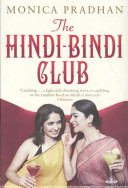
Hindi BindiFor the longest time, I have not read fiction. One sunny afternoon, I find a book that my brother shipped thinking I’d enjoy reading: The Hindi-Bindi Club by second generation Indian-American Monica Pradhan.

This book is about 3 women from India settled in the United States, and about each of their daughters. The way the book is written, each character speaks for herself.

There is Saroj Chawla from Punjab who is a great cook and runs a catering business. Her daughter is Preity, the Miss Perfect, as viewed by one and all. The other character is Meenal Deshpande who hails from Maharashtra. She is more philosophical than others and has learnt from the experiences she had to deal with. Her daughter is Kiran, a physician and a divorcee in her early thirties who comes across as smart and stubborn. And then its Uma Basu, a Bengali scholar and professor. Her daughter is Rani, a wild child growing up but now an artiste.

From the eyes of these three mothers and daughters, you get to experience their wonder years growing up, their challenges with motherhood/daughterhood in a foreign country and all the gossip of what the girls call “The Hindi-Bindi Club”. As I read on, at different points, I could identify with some, the goosebumps, the nostalgia. And above all laughed and laughed at the humor! Saroj has her roots in the cosmopolitan Lahore, a part of India before the horrifying Partition, to become a part of Pakistan. With the character, you go back to the days half a century back with the description of the beautiful city, the festivals, the cheer, the Basant (Spring) in Lahore. Its poetic. Reminded me of the old Hindi movies. Meenal represents the typical and realistic Marathi woman and her life as a girl in Mumbai. The Mumbai rains, the paper boats, the street food, the beach etc. Uma is from Kolkata – the city of so many shades and contrasts. She is an intellectual, has a tough past, how she deals with it and her triumphs, her perspective towards life- its all is very inspiring.

Then there is the second generation of the daughters and their lives and challenges. Thus, it is a seamless patchwork of old and new Bollywood movies into a spectacular melange; now who wouldn’t like that! The book is very entertaining and brings that warm and fuzzy feeling. Its one of those I didn’t want to end. I highly recommend it to women, especially women from the Indian subcontinent settled abroad. They can most identify with it. I will be surprised if no one makes a cross-over movie out of it.

The best part is, each chapter is followed by a recipe. That is a real treat in more ways than one! I actually tried out a few!

My last word: A delightful book that is a must read! 🙂