
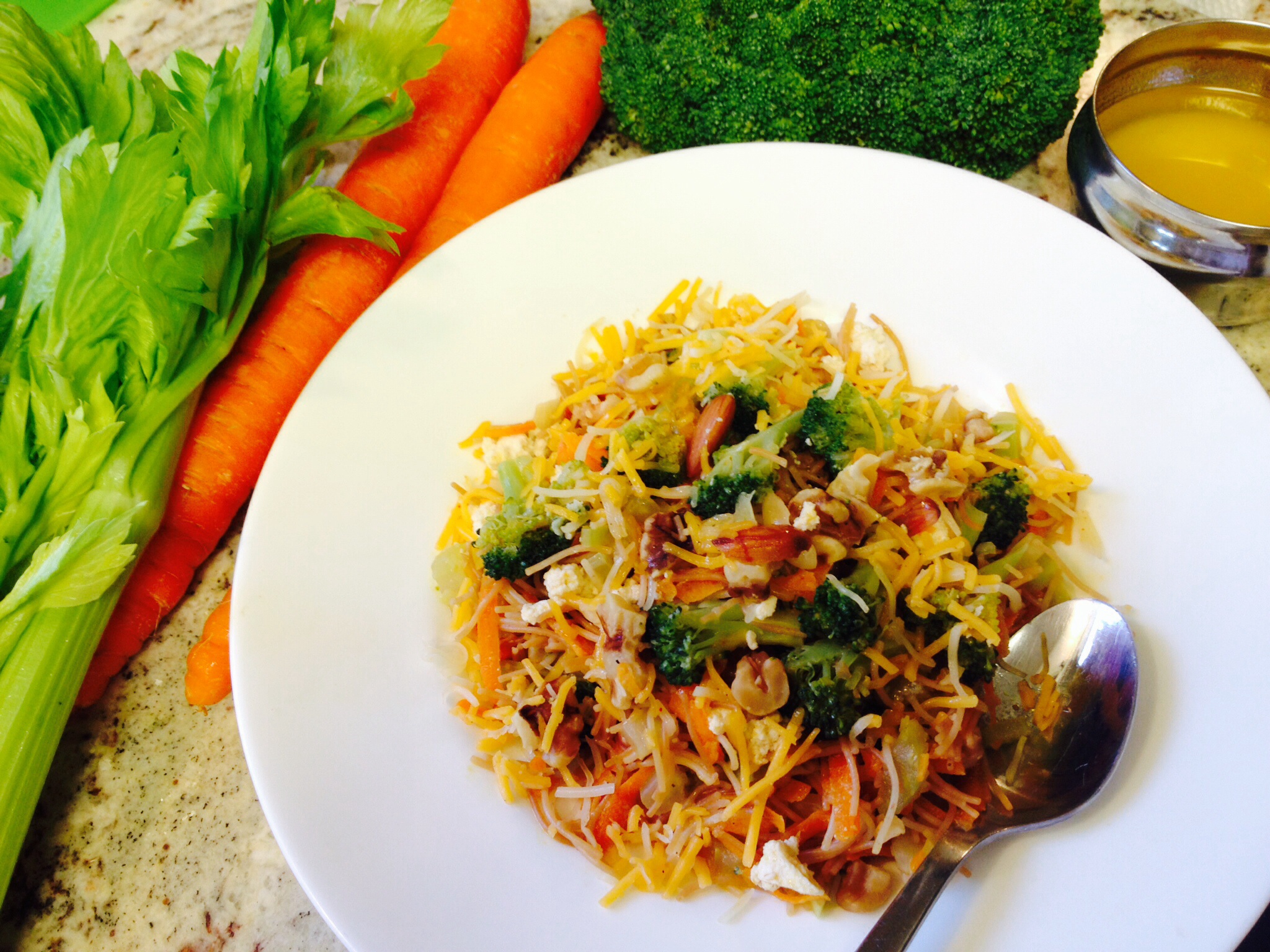
Simple Seviya or Vermicelli recipe for kids

Nutritious seviya / semiya for kids

It is one of those trying times when the kid refuses to eat almost anything offered to him, that you hit rock bottom as a frustrated mother! There are of course exceptions to their don’t-like-anything phase: Mac ‘n’ cheese! Seriously??  That orange sticky gooey ‘stuff‘? It was after one such tantrum that I hatched this evil (read ‘noble’) plan to cheat (not really) my kids with something that slips down their throats with minimal effort, yet get them to eat their veggies. (I know, they could thank me later!)

So I found my answer in semiya or vermicelli, a form of thin noodles used widely in Indian dishes like semiya upma (savory) and kheer (sweet porridge). This simplified version of the recipe worked for me. And I could see the mom-evil-laughter behind my matter-of-fact straight poker face! The pleasure of outwitting your kids by making them eat what you want them to: priceless!

Recipe Outline My standard simple recipe is driven by three factors:

1) Nutritious: enough fresh veggies per serving. My staple – broccoli, celery and carrots. Might add tofu at times for protein. Nuts added at times.
2) texture should be buttery and slimy
3) flavor should be just the right mix of salt-pepper-ghee. Neither too hot/spicy, nor bland.
That said, once the vermicelli is roasted in ghee, you could add any veggies you would like to experiment with, as long as the final product doesn’t lose the texture or taste suitable for kids.

Basic ingredients- kids Seviyan recipe

Basic Ingredients:

3/4 cup vermicelli
1 cup broccoli cut in small florets
1 cup diced celery
1 cup peeled, grated carrot
1 tbsp ghee
Salt to taste
Pepper to taste


Optional ingredients

-1/2 to 3/4 cup tofu. Season with 1/2 tsp salt, 1 tsp honey mustard, pinch of pepper.

-1/4 cup Crushed nuts- cashews and or almonds and or walnuts.

-Some shredded cheese (currently the Mexican Taco seasoning cheese is a household favorite).

-Some ghee before serving.

Recipe

1. Cut vegetables, crush nuts, squeeze out water from the tofu, crumble and season. Set aside.
Put 1&1/4 cups of water to a boil in the microwave at step 5.

2. Add ghee to a thick bottom pan. Add some crushed pepper followed by vermicelli. Roast on a medium to low flame until the color changes to light brown. They could quickly burn, so be fully attentive and keep stirring.

3. Once brown, add nuts and roast for a minute.

4. Add all the veggies and roast another minute.

5. Add the boiling water, salt and cover. Reduce the heat to medium low and let it cook for 5 minutes for el dente.
(I would add a little more water and cook slightly longer when my younger one didn’t have many teeth. Would also powder the nuts then). If there’s still some water left, cook uncovered for a minute of so until it evaporates.

Vermicelli is ready.

6. Mix in the seasoned tofu to the pan now, if you’d like. (No need to ‘cook’ tofu, but you could mix in and cover to let it sit for a minute in the steaming vermicelli.)
7. Add some ghee and / or shredded cheese in the plate before serving.
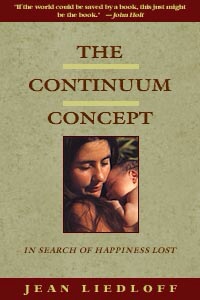
Book Review: The Continuum Concept

This is a must read for all parents to be.
The Continuum Concept by Jean Liedloff

The Continuum Concept is a book that blew my mind; I had read nothing like this before! The author Jean Liedloff spent two and a half years deep in the South American jungle living with Stone Age Indians of the Yequana tribe. This experience demolished her Western preconceptions of how we should live, and led her to a radically different view of what human nature really is. She shows us how we have lost much of our natural well-being and suggests practical ways to regain it for our children and for ourselves.

The continuum theory: “In order to achieve optimal physical, mental and emotional development, human beings, especially babies, require the kind of experience to which our human species adapted during the long process of our evolution.”

Parenting:
That said, the book brings forth ideas in stark contrast to the prevailing practices in the western world. I have to write this: there were some excerpts which were quite unsettling to me that I had to stop, collect myself and with all the courage go back to reading it; who wouldn’t be vulnerable to the idea of babies suffering? The worst part is, this ‘mistreatment’ happens at the hands of parents/ caregivers with much misguided ideas. And that is precisely why it has become my mission of sorts to strongly recommend this book to new mothers or mothers to be.

The book gives some basic practices during the initial moments, weeks and months after a child is born: constant physical contact with the mother/caregiver, co-sleeping, breast feeding on cue (and not trying to ‘discipline’ the baby at this stage by feeding at intervals that you set for them), carrying the baby around in arms, immediately responding to the child’s signals and so on. Is this not something that a mother would instinctively do, only if she is allowed to do so and not ill-tutored otherwise? Of course! However, we have some popular theories to care for the newborn that are just the opposite!

Postpartum depression: The moment the baby is born, the mother is keyed in to hold the baby, nurse and caress it. If this stimulus is not met with this right response and those moments missed, then when hours or even minutes later, the baby is finally brought to her, the mother has already gone into a psycho-biological state of mourning. The result is often that she feels guilty about not being able to ‘turn on mothering’, or to ‘love the baby very much’ as well as suffering the classic civilized tragedy called normal postpartum depressionjust when nature had her exquisitely primed for one of the deepest and most influential emotional events of her life! How unfortunate is that!

It was after reading this book that I could make sense of the what was going on with me after my first child was born (more about it in another post here).

Ancient postpartum care:
Some olden cultures have practices that are very much in line with the continuum, like the ones prevailing in India for a few thousand years (though the ‘modern’ winds are changing these ways for the worse). The mother is exclusively available for the newborn as she and the baby are assigned and confined to a room that’s not too bright (so as not to inconvenience the newborn, I guess) for 40 days. She nurses him on cue, co sleeps with the baby, gets her daily body massage, not allowed to use cold water, served fresh off the stove nutritious meals (fresh hot food is much easier to digest, especially when the new mothers digestive system is still weak) and she is assigned no housework. Elderly women – be she a distant relative, friend or even a neighbor – would come to live with them and assist the household with chores, caring for the baby and the new mother, and offer a wealth wisdom for the two. What a fantastic system it used be in the olden days! Anyway, that’s a topic in itself.

Some important continuum ideas:
The book talks about several concepts like: what the baby feels before he can think is a powerful determinant of what kind of things he thinks when thought becomes possible, and how the child’s general outlook towards life and living is shaped. Many psychological patterns, addictions, attitude, including possibly homosexuality, Liedloff believes, have their roots in the treatment of the child during their stages of infancy and childhood. Its remarkable how the Yequana treat their children that shows inherent respect and intrinsic trust. It’s all so wonderful and gives us a hopeful solution for our entire society.

The book spoke to my heart. Theories come and theories go. But what is important, I think, is that parenting in general should never be influenced by these external hypothesess, but always be guided by one’s instinct within. Be assured, with it you’ll be right on the money!

Important questions to ask oneself:
Am I (like perhaps most others), a victim of incomplete childhood? Is there something missing that I am continually looking for – an innate sense of well being and happiness-‘a natural state of being’- that seems elusive (e.g. the idea that ‘being in love would make it all right’)? Is there some emptiness that doesn’t seem to fill me up? I found some amazing perceptions that I never found in the myriad spiritual and self-help literature I’ve read for over two decades. The book put to rest some questions that had plagued me forever.

My last word:
I strongly recommend this book for two groups: those who are going to be new parents and those who have been babies at one point or another. I can’t emphasize enough- it’s a book not worth passing.

Resources to check out:
The website: http://www.continuum-concept.org/index.html
The super excellent forum: http://www.continuum-concept.org/forum/index.html (the wealth of wisdom from Continuum mothers/parents here is outstanding)